
I found some purslane!
Living on a farm with lots of animals means lots of nutrient-rich sediment in gateways and laneways. And because we use rotational grazing, the various gateways and laneways get time to recover from being trampled by hoofs -- which means time for communities of plants of all kinds to keep developing, diversifying, and dropping their seeds.
Then the animals come back, graze, trample, stir things around, drop their manure, and move on again -- and the diversification continues.
This morning in a gateway that hasn't had any hoofed animals through in a while, I found a lovely surprise among plants busy colonizing the bare ground in our early tropical summer -- purslane (Portulaca oleracea).
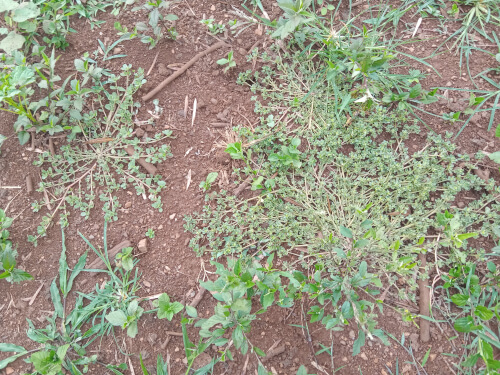
They would have germinated from seed that somehow arrived at our old dairy shed from who-knows where, then were washed down a shallow incline to the gateway at the bottom.
Where they're now jostling for space with other opportunistic plants, all of them working together to fill up the space left by the trampling of hoofed animals.
In the image below, note the plantain plant way down the bottom, slightly left of center. It's shaped a bit like a star or a snowflake.
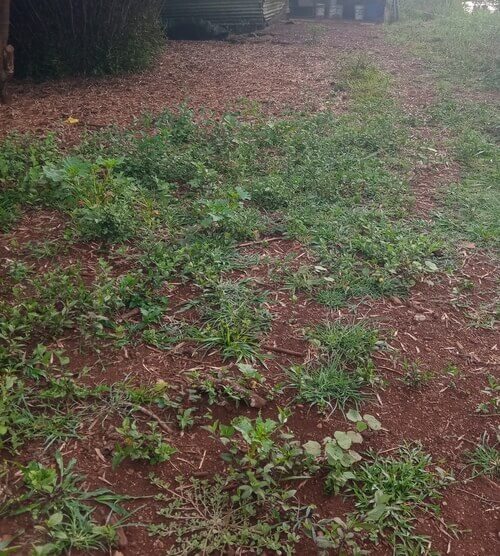
This morning when I saw these plantain plants I had been about to open the gateway to allow cattle through.
I left the cattle where they were and took the time to rescue some of these precious purslane plants from the soon-to-be trampled gateway, and bring them to the garden.
Yay!
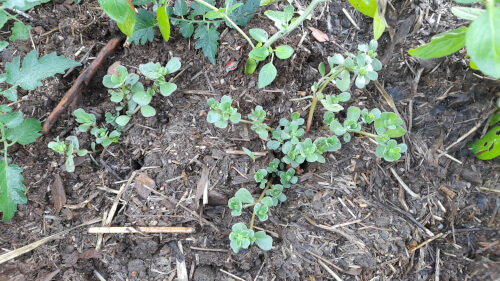
Yay for purslane!
Purslane fits beautifully into my favorite category of food plants -- the kind that some people call "weeds," and others call "nutritious and medicinal herbs."
They're kinds that volunteer themselves right on our doorsteps (or in our gateways) to provide free, nutritious food that far surpasses anything we'll ever find in a supermarket.
In terms of nutrition and vitality, they even surpass any domesticated food plant we grow ourselves -- I wrote more about that, here.
Purslane - description
Purslane is a low growing succulent plant that forms dense mats across the ground. It has small, rounded leaves on thick, smooth stems.
In my experience the stems have a reddish tinge, but the internet says they can also be green, yellowish-green, or purplish-green. The stems look shiny. They branch out from a central taproot, radiating in all directions so that the young plants often appear to be in the shape of a star or snowflake.
Purslane produces small yellow flowers and LOTS of tiny (truly tiny) black seeds inside a clever little cup left behind after the flower.
Purslane growing conditions
Purslane is very easy to grow, as all "weeds" are. It produces prolific seeds which can stay dormant for a long time, then germinate abundantly when soils temperatures climb above about 27 degrees Celsius.
It needs lots of sunshine, is not fussed about soil quality, and does not like to be too wet.
Inadequate sunshine and too much moisture are the reasons purslane doesn't volunteer around here very often -- so now I'm pondering how to arrange a niche for the plants I found this morning to be in a spot that's sheltered from too much rain but still receiving lots of sunshine. It might mean that if I want to keep it near the kitchen (the best place for frequently used food plants) I have to put some in a big shallow container and move it around a bit.
Which I think would be worthwhile because, well, purslane!
Eating purslane
Purslane is very nutritious.
Michael Pollan is said to have called it one of the two most nutritious plants on the planet in his book In Defense of Food. The other one was apparently lambs quarters, another wild edible and a member of the amaranth family.
I'm not sure how its possible to label a given plant as "most nutritious," since that tries to fix in place something that's changeable and context-dependent, but anyhow -- the general consensus is that if you make a list, purslane is up there near the top of it.
In her book, How Can I Use Herbs in my Daily Life, Isabell Shipard describes purslane as a nutritional powerhouse, particularly in terms of minerals (most notably calcium, iron, magnesium, and potassium), omega-3 fatty acids, vitamins (A, B, C), and antioxidants.
Purslane has been used a food plant throughout the drier, hotter parts of the world--Mediterranean & Middle East, Mexico & Latin America, and Australasia--for a very long time. Hundreds or thousands of years.
The leaves and young stems are crunchy, fleshy, and have a mild lemony taste. They can be eaten raw in the garden and in salads, or cooked any way you can think of to cook them.
You can also make pesto with purslane. You could make vinegar with it. You can pickle the young stems. In fact, here is a list of 20 purslane recipes, and here is another list of 45 ways to eat it - oh my!
Purslane as a medicinal herb
Science Direct has a page that describes purslane as "a medicinal herb that is edible and possesses multiple biological activities, including anti-inflammatory, anti-oxidation, immune regulation, and anti-tumor effects.
That's just a small mouthful of the medicinal properties attributed to purslane on the internet. For more, see my sources below or get a cuppa and find some yourself.
I have no personal experience with using purslane medicinally and therefore no suggestions on it, except to repeat the quote from who ever it was that said, "Let food be thy medicine..."
If you have stories about using it medicinally, please scroll to the bottom and share them in the comments -- please and thank you 🙂
Sources
Sources for this post (that I didn't already link to) include:
A review of traditional uses of ... Portulaca oleracea
"One Small Serve" - homegrown food on a very small scale

In One Small Serve, learn how to grow and use 7 easy, low maintenance, nutritious food plants that are productive for two or more years without replanting.
Establish a "one-serve-at-a-time" home-grown food habit you can maintain.
Includes a series of free extra tips + free email support
Scroll to the bottom to comment 🙂
Not subscribed?